Brand or Website First? Where a New Business Should Start
Usually the brand, but a small one. A website is built from a name, a logo, colours and one clear sentence about who you serve. If those already exist, start with the website. If they do not, settle a lean version first, so the site has something to stand on.
- For
- Starting
- Published
- Reading
- 5 minutes
- By
- Aeterna Works
Most new businesses reach the same question early: do we start with the brand or the website? Both feel urgent. The website is where customers will look, and the brand is what the website is supposed to show. Pick the wrong order and you can end up paying for the same work twice.
There is no single right answer, but there is a simple way to decide. It depends on what you already have, not on what sounds more important.
What a website needs from the brand
A website is built out of brand decisions. Before anyone can design a page, a few things have to be settled:
- A name, and ideally a domain that matches it.
- A logo that works small, on a phone, and large, at the top of a page.
- Colours and type, even if it is only two colours and one typeface.
- One clear sentence about what you do and who it is for.
- A sense of tone: formal or relaxed, quiet or bold, local or international.
If those exist and you are happy with them, the website has something to stand on. If they do not, the website team will end up making those decisions on the fly, page by page, and they will be harder to change later.
When to start with the brand
Start with the brand when:
- The name, logo or look are not settled yet. A site built around a temporary logo usually has to be redone when the real one arrives.
- You are entering a market where trust matters. Property, professional services, hospitality and anything with a high price ask the customer to believe you before they meet you. A clear identity does a lot of that work.
- More than one thing will carry the brand soon. Signage, packaging, a company profile, social media and a website all need the same rules. Setting them once is cheaper than fixing five versions later.
A brand at this stage does not need to be large. A logo, a colour palette, a type pairing and a short set of guidelines is enough to build on. The longer brand book can come when the business has grown into it.
When the website can come first
The website can come first when:
- You already have a brand that works. Maybe it was made when the business started and still fits. Then the website can use it as it is, and you can refresh the brand later if you need to.
- You need to be findable now. A launch date, a trade show or a first big client may not wait for a full identity. A simple, well-made site with a clean wordmark can go live first, as long as everyone knows it will be updated when the brand is finished.
- You are still testing the idea. A single page that explains the offer and collects enquiries can tell you whether people want it before you invest in a full identity.
In each case, be honest about what is temporary. A temporary logo that quietly becomes permanent is how many businesses end up with a brand they never chose.
Doing both on a small budget
If you need both and the budget is tight, the order that usually wastes the least is:
- A lean brand foundation: name check, logo, colours, type and a few pages of guidelines.
- A small website built on it: a handful of pages that explain what you do, show your work or products, and make it easy to get in touch.
- The rest when it earns its place: a fuller site, more content, photography, a brand refresh as the business changes.
Doing them together, with the same team, also avoids a common gap: the brand designer hands over files, the web developer interprets them, and the details drift. When one team does both, the website is designed with the brand rather than after it. Our pricing page shows how we package brand and website together for this reason.
What can wait
Plenty of things feel necessary at the start and are not:
- A forty page brand book. A few pages of clear rules are enough to begin.
- A full stationery set. Business cards and an email signature cover most first needs.
- A blog, a news section or ten pages of content you do not have yet.
- A content management system, if nobody on your team will update the site in the first months.
Spend first on the things every customer will see: the logo, the first impression of the website, and the way you describe what you do.
A worked example: Studio Tanah
To show how brand decisions carry into a website, we made a concept site for Studio Tanah, an imagined architecture, interior and development practice in Canggu. It is a concept project, not a real client.
The key decision was a brand one: present every project like a plate in a book, with a number, a place and a year. Once that rule existed, the website followed it, the index of works followed it, and so did the Instagram carousels and the reel. Nobody had to invent a new style for each channel, because the brand had already answered the question.
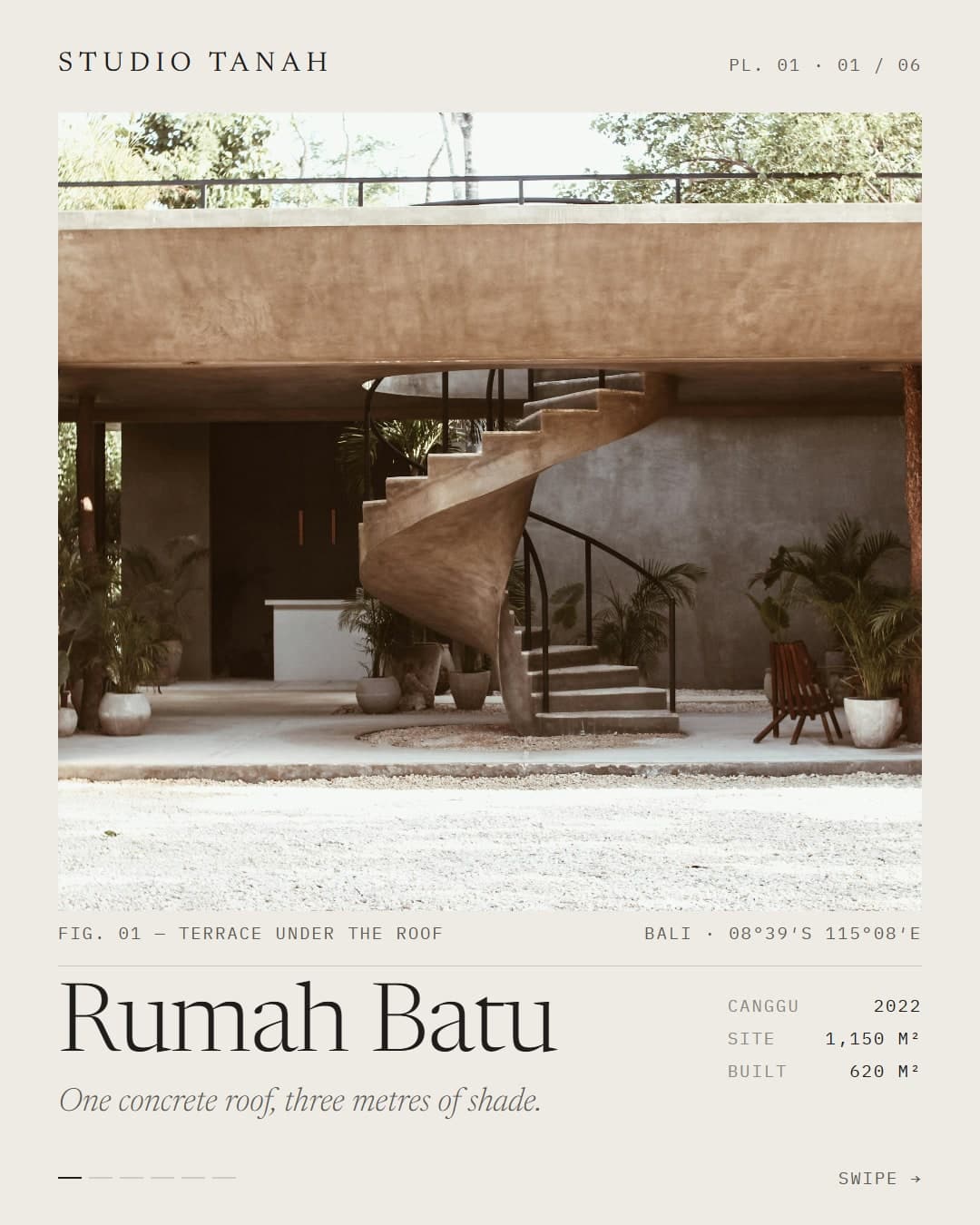
You can open the case study here: Studio Tanah, Concept project.
A short checklist
Before you start a website, check whether you have:
Ready to build a website?
- A name you are keeping, and a matching domain
- A logo that works small and large
- Two or three colours and a typeface
- One sentence that says what you do and who it is for
- A clear idea of the tone you want
- The photographs or product images the site will need, or a plan to make them
If most of these are missing, start with the brand. If most are in place, start with the website, and note the gaps to close as you go.
From the studio
If you are starting a business and not sure where to begin, tell us what you have so far. We will tell you what we would do first, and what can wait.